Tax Planning Strategies
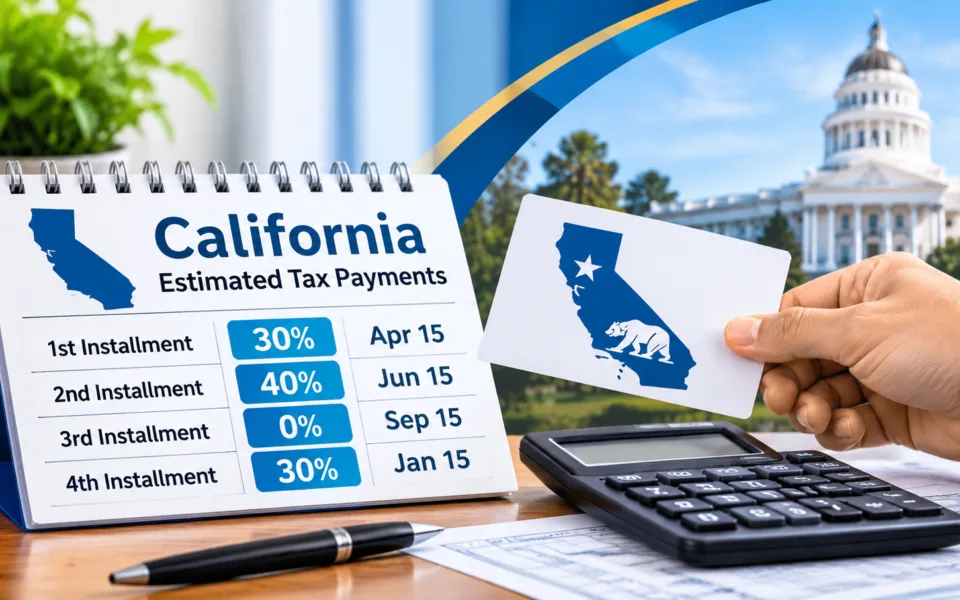
California Estimated Tax Payments: 30/40/0/30 Schedule
California splits estimated tax into four installments of 30%, 40%, 0% and 30% of the required annual payment.…
READ MORE ● NexusWorks Team
Reviewed by a licensed CPA
Short answer: The tax planning strategies that actually matter for 2026, from entity structure to the new SALT deduction cap and retirement contribution limits.
Every year brings a few tax law tweaks, but 2026 has more moving pieces than usual. New income thresholds, a higher state and local tax deduction cap, and provisions carried over from last year’s tax legislation all change what a smart tax strategy actually looks like right now. If your plan is still based on last year’s numbers, you’re probably leaving money on the table.
The standard deduction increased again this year, and the cap on state and local tax deductions rose significantly, from the old ten thousand dollar limit to a much higher figure, with a phaseout that kicks in at higher income levels. For business owners and high earners in states with meaningful income or property taxes, that change alone is worth a second look at your return.
None of this happens in isolation either. A change in one bracket or deduction usually affects timing decisions elsewhere, which is exactly why a strategy built in January often needs revisiting by summer.
A lot of businesses are taxed inefficiently simply because nobody revisited their entity structure after the first year or two. An LLC that made sense at a lower revenue level can cost thousands once profit climbs. S-corp elections can reduce self-employment tax exposure, but only when the numbers support it and the payroll requirements are set up correctly.
This is worth reviewing annually, not once and forgotten, especially if 2026 has been a growth year for your business.
With adjusted brackets and a higher SALT cap phasing out at a specific income level, timing matters more this year than usual. Accelerating a planned expense into the current year, or deferring income into a lower-bracket year, can meaningfully change your total tax bill, but only if you know where you stand well before December.
This is one of those strategies that sounds simple but requires clean, current bookkeeping to execute correctly. You can’t time decisions around numbers you don’t have visibility into yet.
Contribution limits for 401(k)s, SEP IRAs and defined benefit plans continue to rise, and for profitable owners, maxing these out remains one of the largest legal ways to reduce a tax bill. Catch-up contributions for those in their early sixties are especially generous this year, and SEP IRA contributions can often still be made after year end, up until your filing deadline.
The cap on state and local tax deductions rose sharply for 2026, which is a meaningful shift for higher-income taxpayers in states with significant income or property taxes. That said, the benefit phases out above a certain income threshold, so it’s worth running the actual numbers rather than assuming it automatically helps.
Here’s the pattern we see most often. A business owner talks to their accountant once, right before filing season, and treats that conversation as their tax strategy for the year. But tax planning isn’t a single decision, it’s a series of smaller ones made throughout the year as your income, expenses and circumstances shift.
This is the idea behind our tax planning and strategy services, built around reviewing your numbers regularly instead of once a year under deadline pressure.
If you want to know where your current approach might be leaving money on the table for 2026, book a free 15-minute strategy call and we’ll go through it together.
Related reading: Tax Planning vs Tax Preparation: What’s the Difference?
Frequently Asked Questions

What’s the biggest tax change business owners should know about for 2026?
The higher SALT deduction cap is one of the most significant changes for higher-income taxpayers, alongside updated retirement contribution limits and adjusted income brackets. The right strategy depends on your specific income level and state.
Do I need to redo my whole tax strategy every year?
Not from scratch, but a review is worth doing annually at minimum, and quarterly if your income or business structure is changing. Small adjustments each year usually beat one big overhaul every few years.
How does the higher SALT deduction cap affect me?
If you’re in a state with meaningful income or property taxes, the higher cap could mean a larger deduction than in previous years, though it phases out at higher income levels, so it’s worth calculating your specific situation rather than assuming.
When should I start tax planning for 2026?
Now, if you haven’t already. Tax planning works best when there’s still time left in the year to act on it. Waiting until filing season means most of your options have already closed.
Does tax planning look different for a small business versus a solo owner?
Yes, to a degree. A solo owner has more flexibility around entity structure and retirement contributions, while a business with employees has to factor in payroll, benefits and potentially multi-state complexity. The core principles are the same, but the specific moves depend on your setup.
Keep reading
Tax Planning Strategies
California splits estimated tax into four installments of 30%, 40%, 0% and 30% of the required annual payment.…
READ MORE ●Tax Planning Strategies
AI tax preparation tools handle data entry and standard situations well, such as W-2 income and common credits.…
READ MORE ●Tax Planning Strategies
A W-2 gives you fewer levers than a business owner has, but the ones you have still matter.…
READ MORE ●Hi there! Have a question about tax, bookkeeping or CFO support? Send us a message on WhatsApp.
Start chat