Business
How Much Does a CPA Cost for a Small Business?
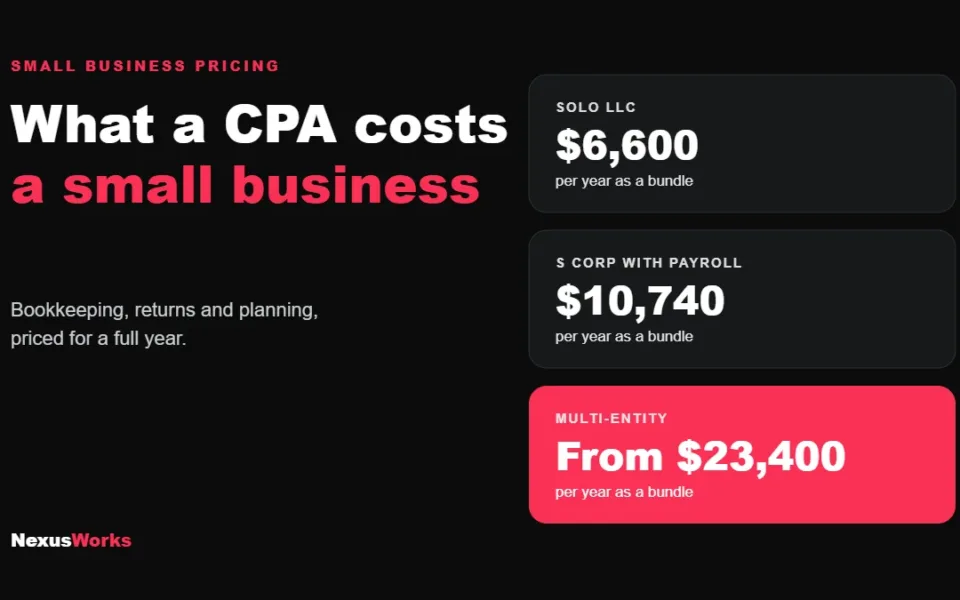
A small business usually spends $3,800 to $11,000 a year on a CPA once bookkeeping, returns and planning…
READ MORE ● NexusWorks Team
Reviewed by a licensed CPA
Short answer: Discover what fractional CFO services include, when startups need one, and how NexusWorks helps founders forecast, fundraise, and scale with confidence.
A fractional CFO is an experienced financial executive who works with a startup part-time, providing the strategic finance leadership of a full-time CFO, such as forecasting, fundraising support, and cash flow strategy, without the full-time salary. Startups typically bring in a fractional CFO when they are preparing to raise a funding round, scaling quickly, or making financial decisions too complex for a bookkeeper or accountant alone.
Fractional CFO engagements are built around forward-looking financial strategy rather than historical record-keeping. For most startups, the scope includes:
Most founders wait too long to bring in strategic finance support because day-to-day bookkeeping looks fine on the surface. The real signals are usually strategic, not administrative:
These three roles are frequently confused, and the confusion itself creates coordination problems inside a startup’s finances.
Bookkeeper: Records transactions, reconciles accounts, and produces historical financial statements. Focused on accuracy of what already happened.
Fractional CFO: Uses that financial data to build forecasts, guide fundraising, and advise on strategic decisions, on a part-time or project basis. Focused on what should happen next.
Full-time CFO: Provides the same strategic function as a fractional CFO but as a full-time, in-house executive, typically justified once a company reaches significant scale and complexity.
A fractional CFO is the right fit for the gap between the two, when a startup has outgrown basic bookkeeping but is not yet ready for a six-figure full-time executive hire.
Fractional CFO engagements are typically priced well below a full-time CFO salary, since the cost is scoped to the hours and deliverables a startup actually needs, such as monthly forecasting and quarterly board reporting, rather than a five-day-a-week executive presence. Cost depends on company stage, transaction complexity, and whether the engagement includes fundraising support.
NexusWorks provides fractional CFO services as part of a coordinated Financial Triangle, bookkeeping, tax strategy, and CFO advisory operating from the same financial system rather than separate vendors. For startups, that means your fractional CFO’s forecasts are built on bookkeeping data that is already clean and reconciled, and your tax strategy is aligned with the growth plan your CFO is building, not created after the fact.
Preparing for a raise or outgrowing your current bookkeeping setup? Book a free financial assessment with NexusWorks LLC to see if fractional CFO services are the right next step.
Related reading: Fractional CFO vs. Full-Time CFO: Costs and Differences
Frequently Asked Questions

What is the difference between a fractional CFO and a bookkeeper?
A bookkeeper records and reconciles past transactions. A fractional CFO uses that data to build forecasts, guide fundraising, and advise on forward-looking financial strategy.
When should a startup hire a fractional CFO?
Most startups bring in a fractional CFO when preparing for a funding round, scaling revenue quickly, or facing financial decisions that require modeling and strategy rather than basic reporting.
How many hours does a fractional CFO typically work per week?
Engagements vary, but most fractional CFO arrangements run on a part-time or project basis, commonly a few hours per week up to several days per month, scaled to the startup’s stage and needs.
Can a fractional CFO help with fundraising?
Yes. A core part of fractional CFO services is preparing investor-ready financial models, forecasts, and data rooms, and supporting due diligence during a funding round.
Is a fractional CFO cheaper than hiring a full-time CFO?
Yes, fractional CFO services are typically priced at a fraction of a full-time CFO’s salary because the engagement is scoped to specific deliverables and hours rather than a full-time position.
Keep reading
Business
A small business usually spends $3,800 to $11,000 a year on a CPA once bookkeeping, returns and planning…
READ MORE ●Business
Before the first QuickBooks payroll, open your state withholding and unemployment accounts, collect W-4s and state forms, set…
READ MORE ●Business
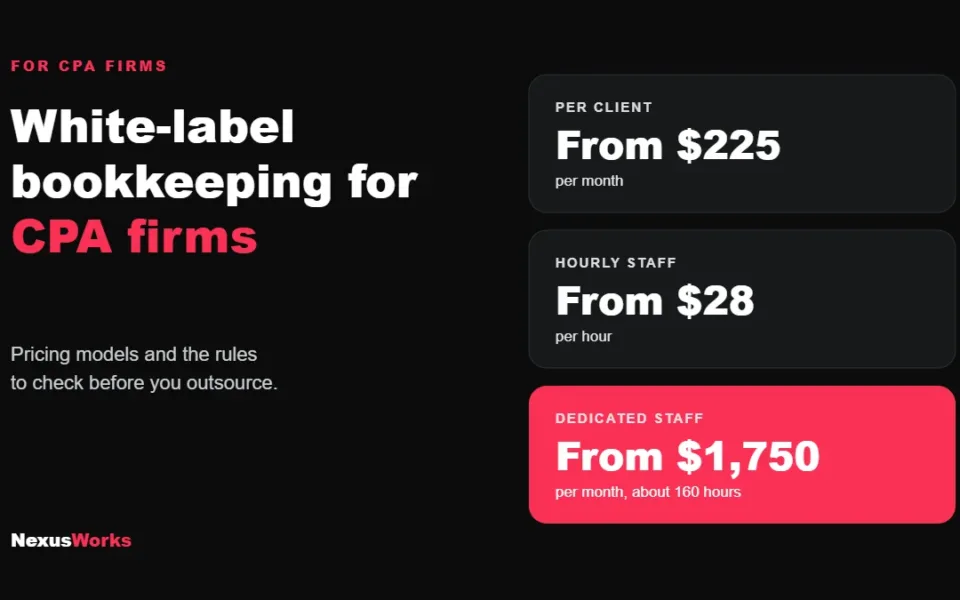
How white-label bookkeeping works for CPA firms, what it costs, and the Section 7216 and data security rules…
READ MORE ●Hi there! Have a question about tax, bookkeeping or CFO support? Send us a message on WhatsApp.
Start chat